
Program Coordinator
Malish Godfrey:
Finding and Cultivating Hope
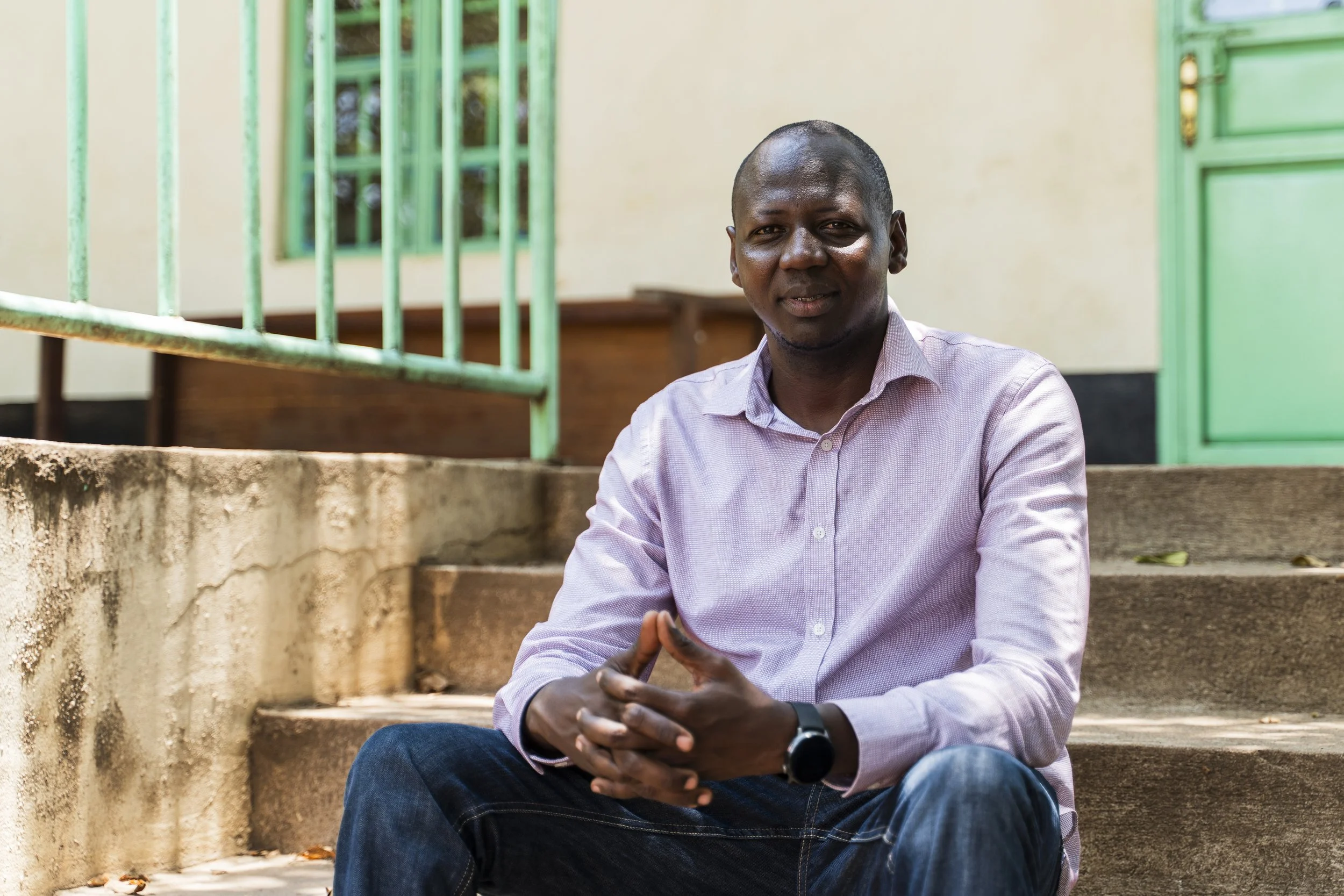
My name is Malish Godfrey, and my journey is one of cultivating hope. Born in South Sudan, my early years were marked by conflict. By the age of three, I was an internally displaced person (IDP), and by six, I was living in a refugee camp (Imvepi) in Uganda.
Uganda became home for nearly two decades. Growing up in a refugee community taught me resilience, adaptation, and the importance of finding beauty even in the most difficult circumstances.
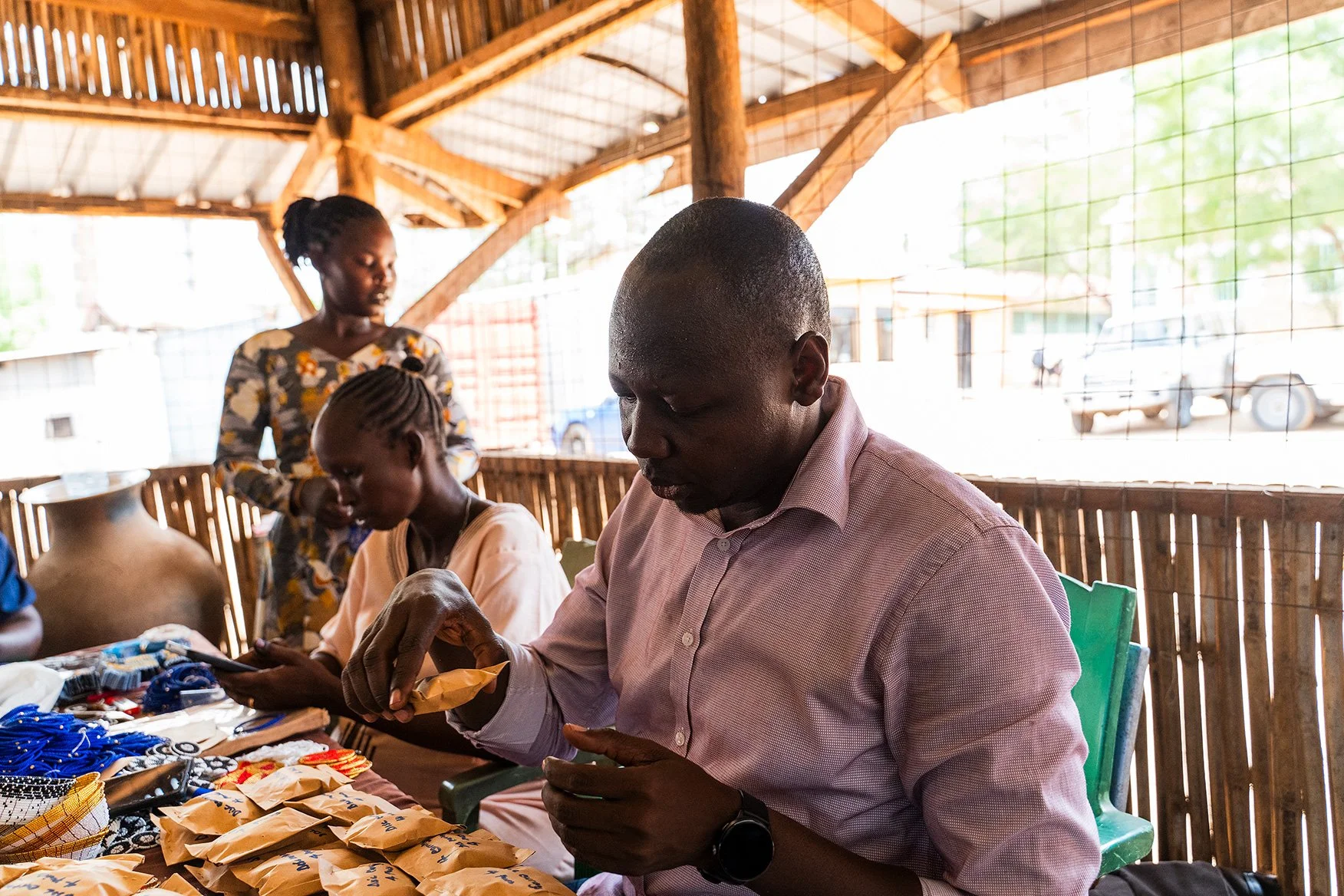
My story is deeply tied to my mother’s. She never had the chance to finish school, dropping out as a teenager when she became pregnant. Yet she carried a skill passed down from her own mother: embroidery. From our small space in the camp, she embroidered bedsheets and sold them to support our family. Her creativity and determination helped us survive and inspired my lifelong passion for craftsmanship, hard work, and giving back to my community.
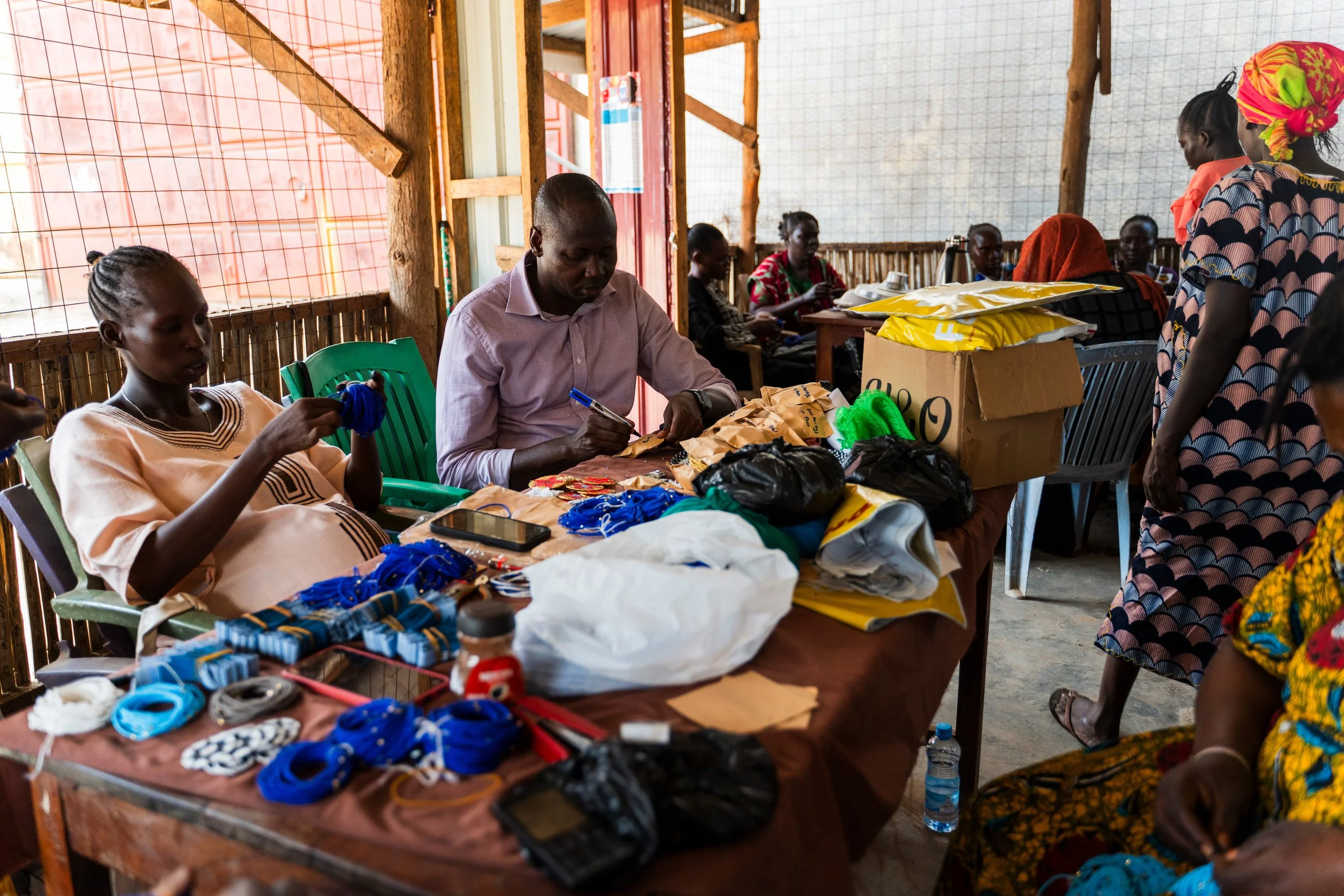
When South Sudan gained independence in 2008, we returned. I pursued higher education, earning a Bachelor of Commerce degree and a Certificate in Certified Public Accountant (CPA). I worked at Ecobank South Sudan before joining the Roots Project in 2016 in Finance and Administration. At Roots, I discovered a deeper purpose working alongside vulnerable women, many of whom were refugees and internally displaced, just like my family was.
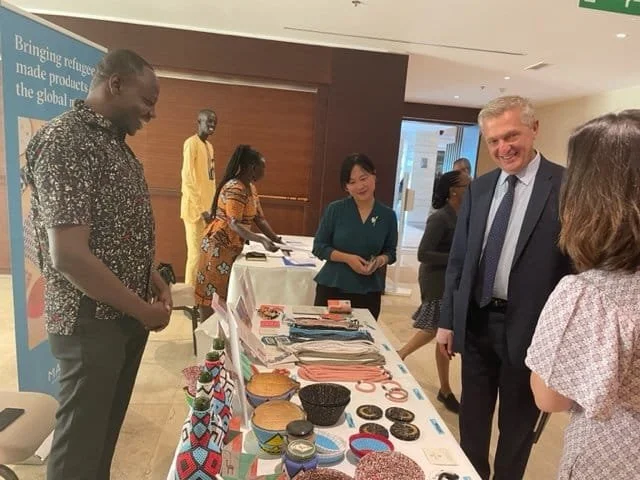
This work has taken me beyond South Sudan. In 2019, I represented the Roots Project at the African Economic Forum in Rwanda, and later represented Made51 at the House of Lords, sharing our community’s story of resilience and creativity on global platforms.
Today, through the Roots Project, I support over 500 women artisans who are refugees and internally displaced across South Sudan. Through their traditional skills, much like the embroidery my mother once practiced, we help women earn an income, restore dignity, and build new lives.
In 2024, I was given a profound opportunity by Anyieth D’Awol to attend a trauma healing training she facilitated with the Center for Mind Body Medicine (CMBM). During the training, suppressed emotions surfaced that I did not fully understand. I later realized it was the trauma my body had carried for years without a name.
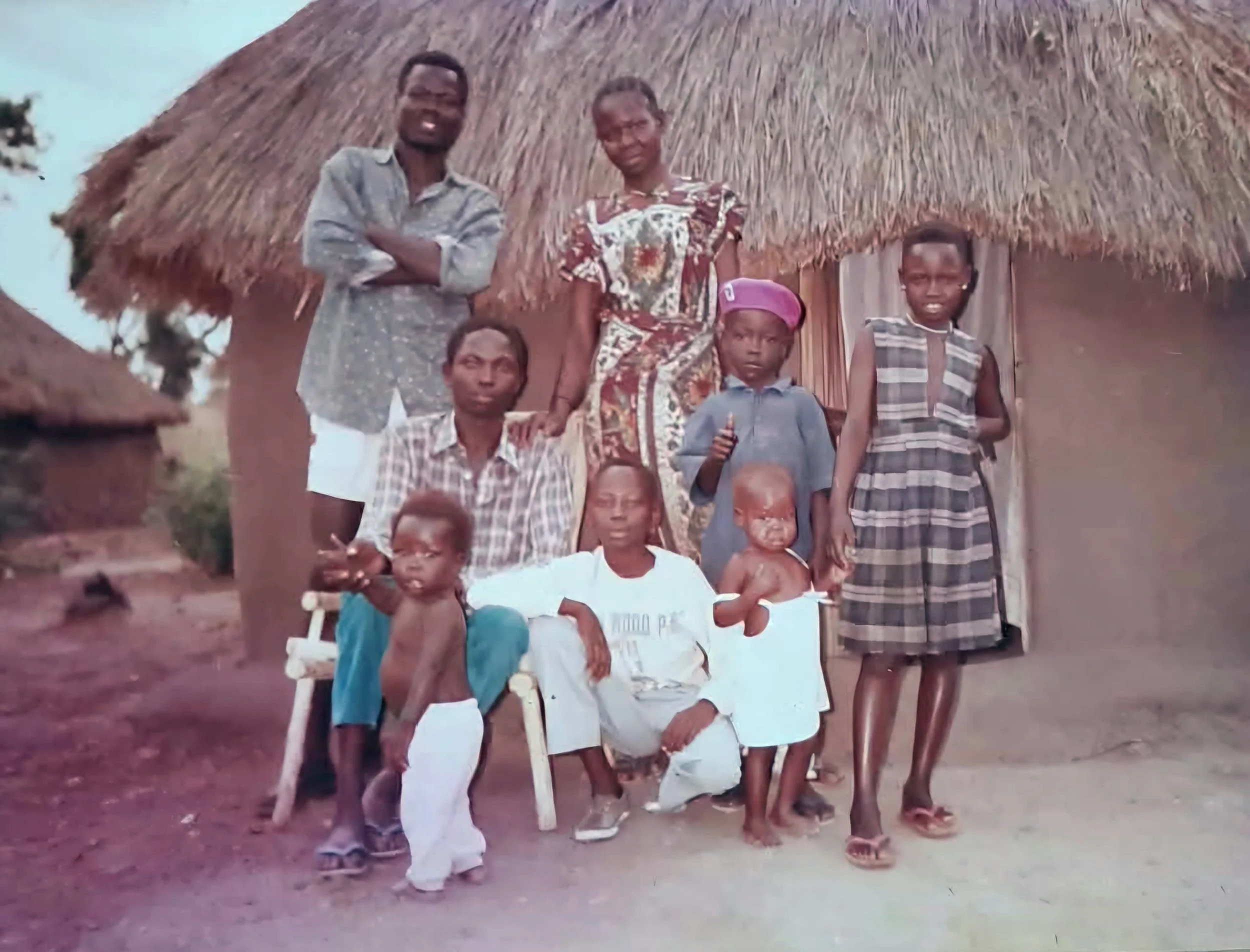
This trauma was inherited from my mother, who endured deep wounds of her own. She was denied education to care for her siblings, prevented from marrying across tribal lines, experienced teenage pregnancy at 17, and was forced to raise a child alone. These unresolved pains were unintentionally passed to me through harsh treatment and physical punishment during my childhood.
As a child, I also suffered from a severe illness, kwashiorkor, which nearly claimed my life. My early years were shaped by vulnerability, fear, and survival long before I had the words to describe them.
In 1991, my mother and I fled from Yei to Bazi due to the civil war, where we endured terrifying aerial bombardments. From there, we escaped to Uganda and lived as refugees until 2008. Life in the camp brought continued uncertainty, loss of home, and constant struggle for food and safety.
The trauma training in 2024 became a turning point. It helped me understand the interconnected nature of personal, generational, and collective trauma, and showed me that healing was possible.
Through this awakening, I found purpose as a South Sudanese CMBM facilitator, supporting vulnerable women to heal trauma so it is not unknowingly passed to their children. Through my work with Roots and CMBM-Africa, I remain committed to helping South Sudan, a nation deeply affected by prolonged conflict, and Africa as a whole to release collective trauma, embrace reconciliation, and rebuild peaceful relationships.