The Workshop
How Roots Works: Work, Care, and Economic Opportunity
Roots operates in two interconnected spaces:
The Workshop in Juba
Gorom Refugee Settlement in Juba
The Centre and Camp enables women to earn a reliable income while improving their skills and caring for their children. Each day, essential services such as childcare support, meals, and transportation assistance—make participation possible for women who otherwise could not work.
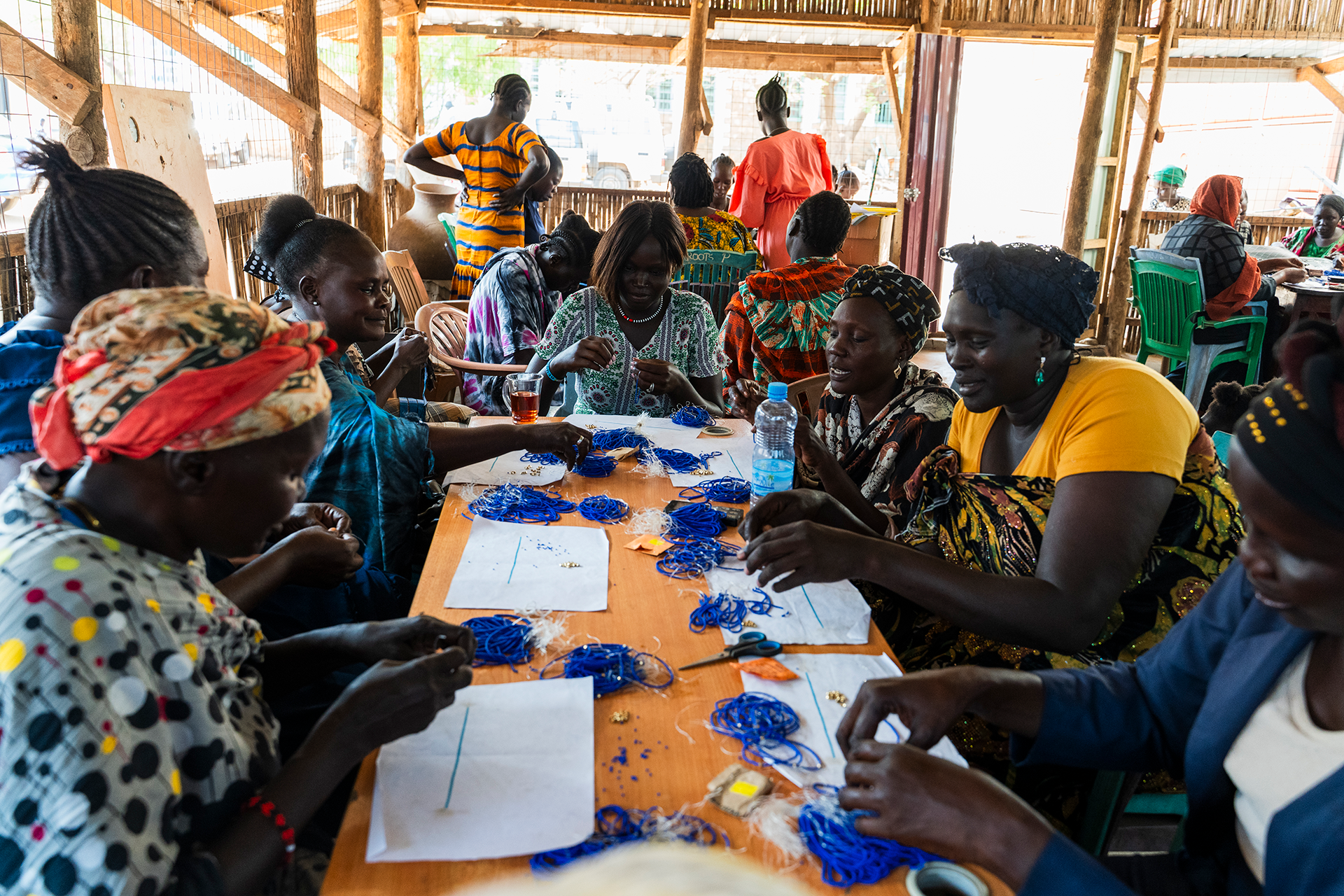
Within the spaces, trained Quality Controllers (QCs) manage bead inventory, procure materials, interpret client orders, plan workflows, timelines and ensure production meets international standards. Orders range from a few hundred to tens of thousands of pieces and they are distributed among members based on experience and expertise. In both spaces, Roots is about far more than production. These are places of learning, earning, healing, and community building.
The Workshop in Juba
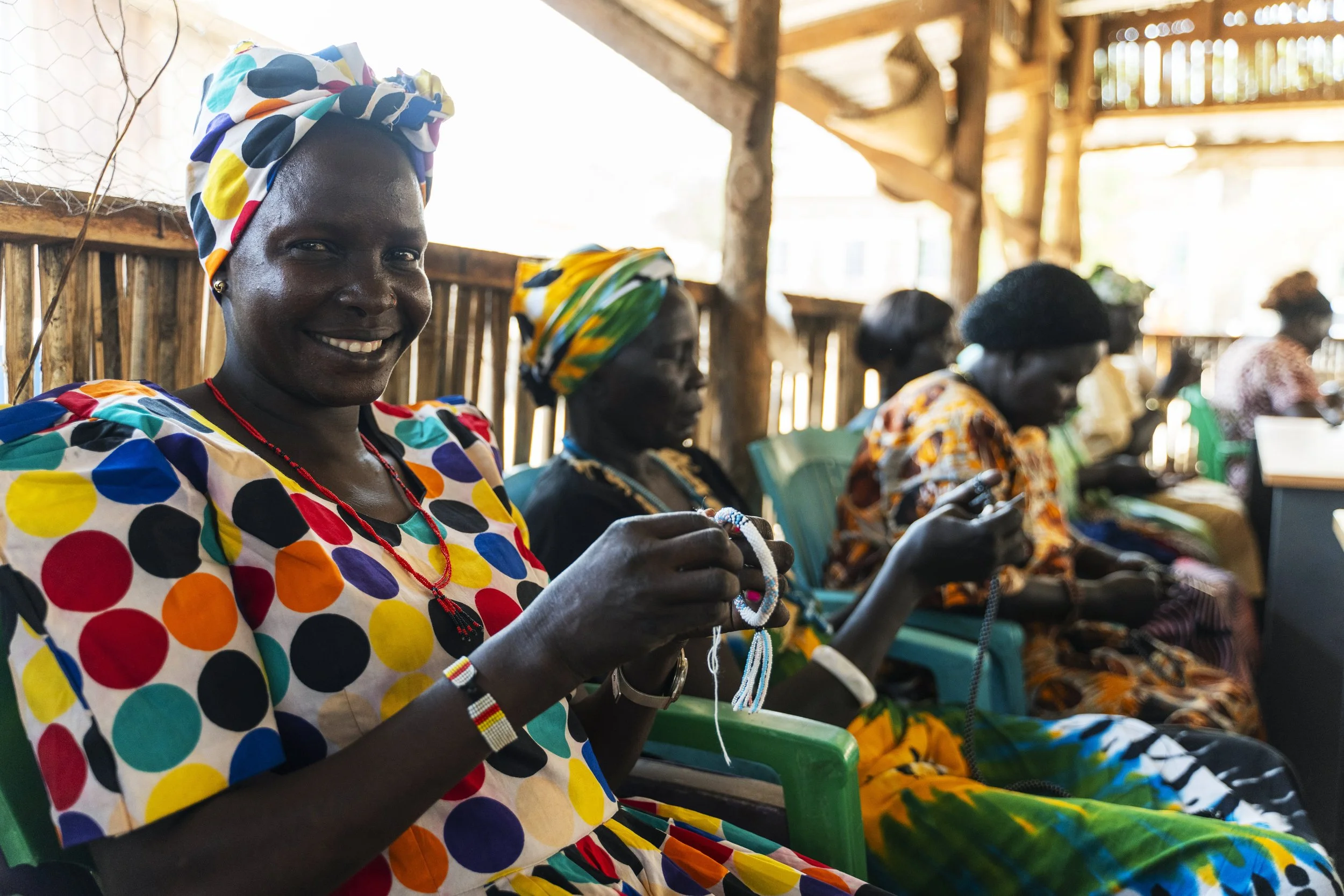
The Workshop is the heart of The Roots of South Sudan, a shared space where women converge to learn, collaborate, and grow. Roots has over 60 members representing 24 South Sudanese tribes, each bringing distinct cultural traditions, designs, and techniques. Working side by side, these women exchange skills, care for one another’s children, and form relationships that cross tribal and cultural boundaries.
Through this daily collaboration, women build trust, provide emotional and social support, and become deeply invested in one another’s success and in the collective future of Roots.
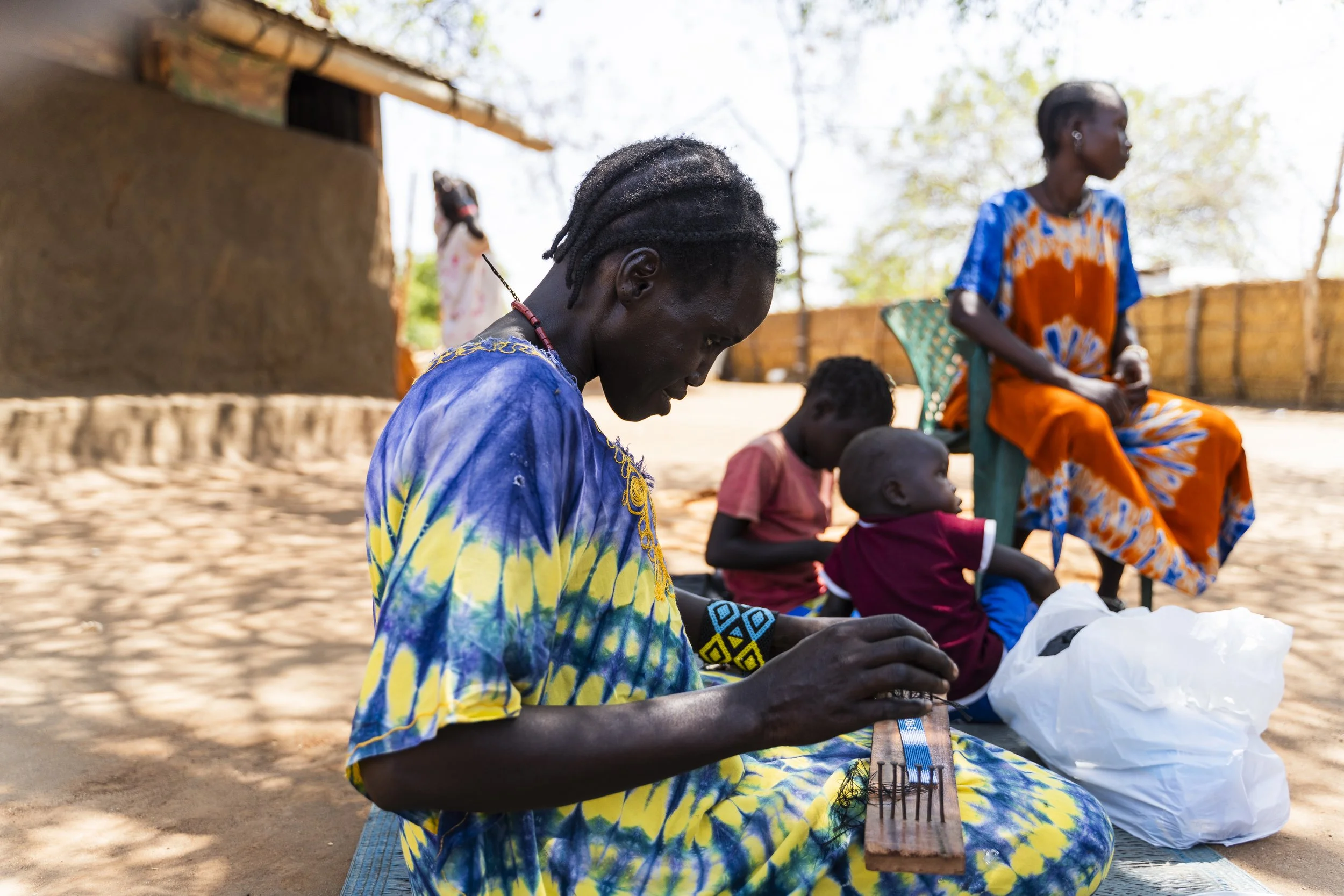

Gorom Refugee Settlement
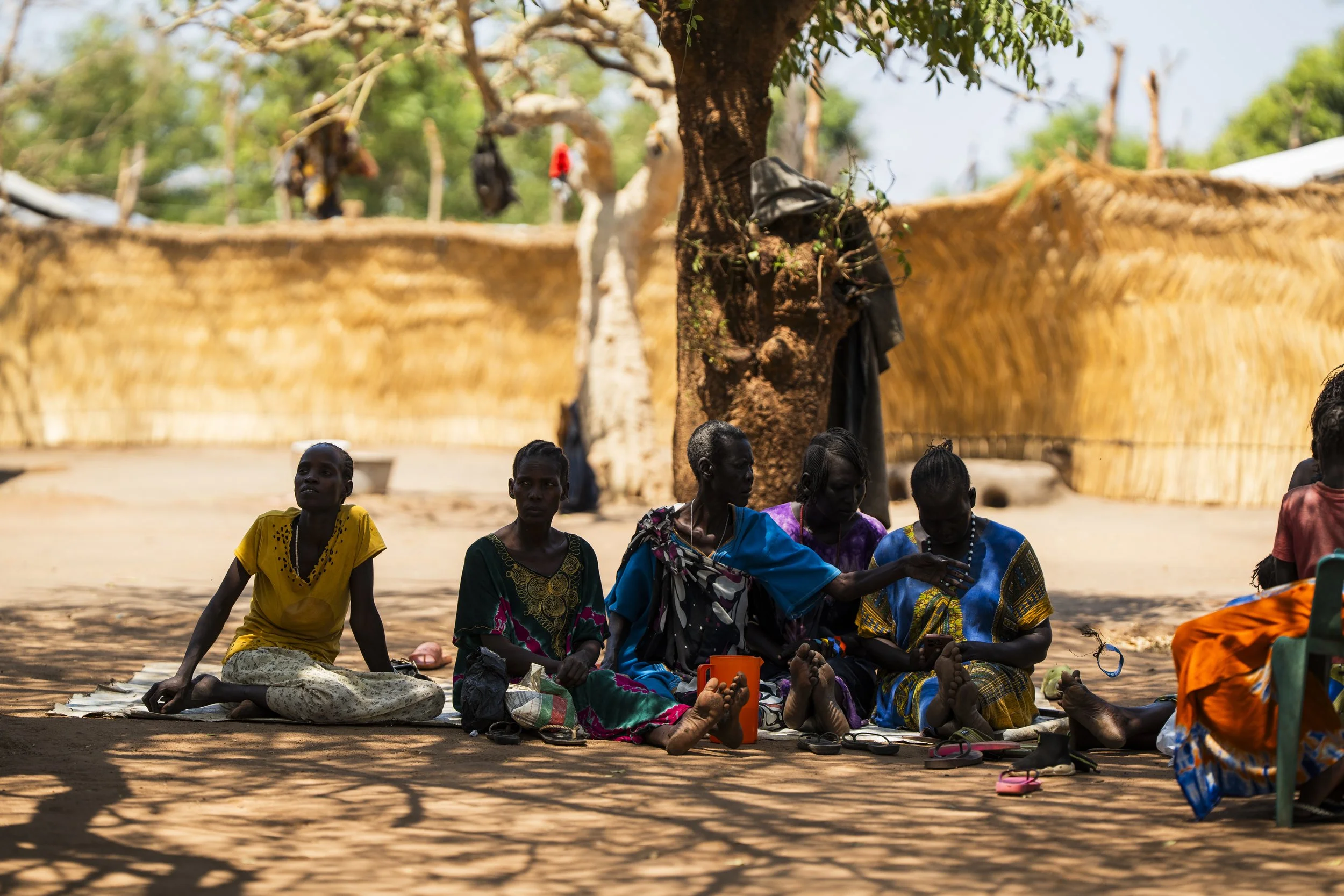
Roots works in Gorom Refugee Settlement, home to displaced refugees from Sudan and Ethiopia. Following the outbreak of war in Sudan in April 2023, the camp’s population grew rapidly, exceeding 22,000 residents by April 2025, far beyond its capacity of 2,500, placing severe strain on services.
With support from UNHCR, Roots uses a dedicated space in the camp to train and work with women artisans. While as many as 350 women have participated in production over time, Roots maintains regular engagement with over 100 women. Women receive ongoing guidance from camp-based and Juba-based Quality Controllers. During active production periods, QC managers travel weekly from the Center to assess quality and transport finished goods for packaging and international shipment.
Healing Through Community and Practice
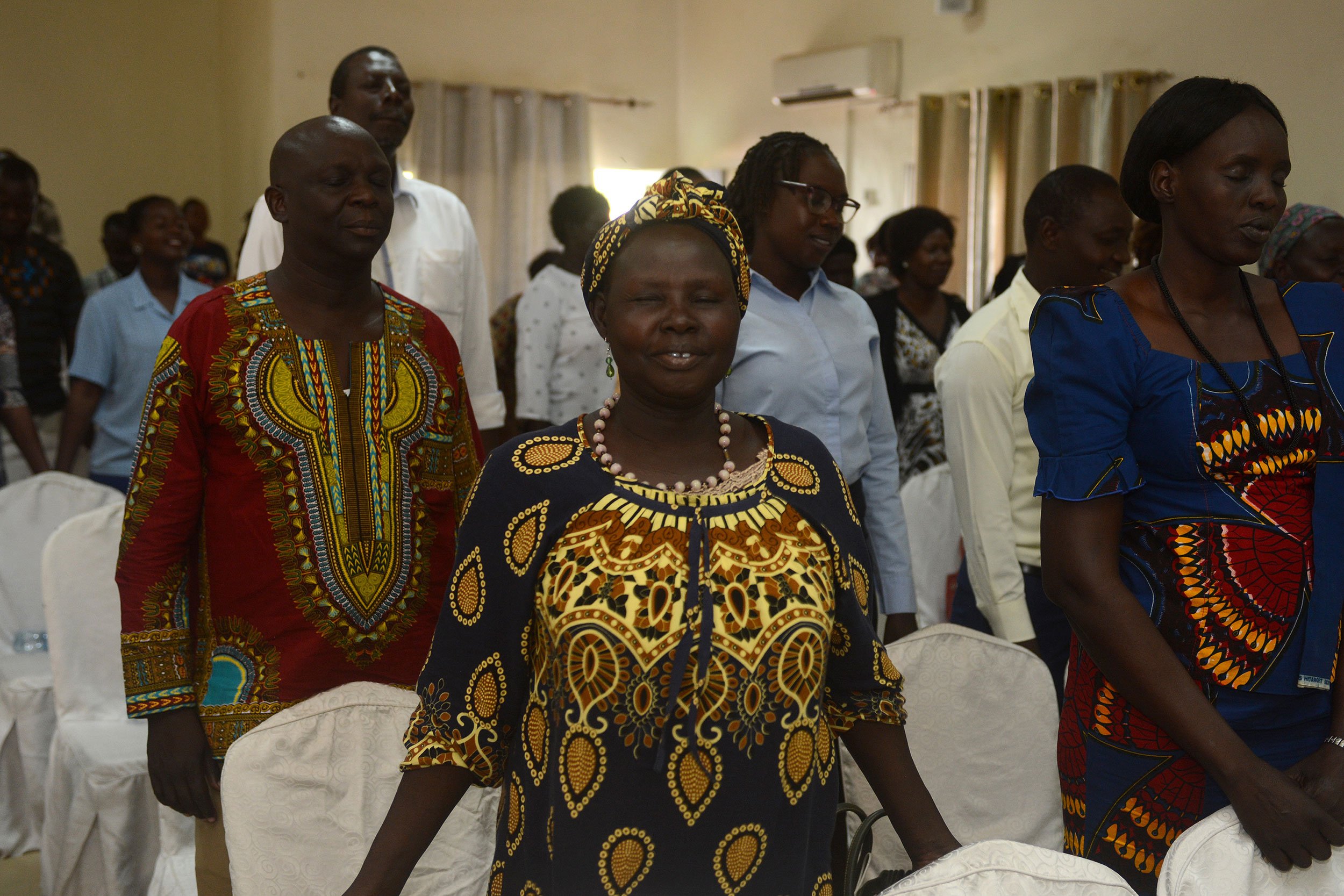
Many Roots members come directly from war zones and displacement. Most have been through Centre for Mind-Body Medicine (CMBM) trauma healing and two are trained facilitators. Through meaningful work, community support, and shared responsibility, women begin to recover from the trauma of war and separation. Mindfulness, meditation, and prayer have become daily practices at both the Centre and the camp, supporting emotional regulation, self-awareness, and healing.
Women often describe seeing the tangible results of their work which combines steady income and collective care as a turning point in their ability to care for themselves and their children and to imagine a future again.